The cost of climate inaction is the economic damage that builds up when emissions are not cut, plus the higher price of acting later. Evidence from official bodies suggests delay is rarely the cheaper path.
This page belongs to the climate change explained series. It sets out what the damage looks like in measured losses, what economic assessments say about acting early, and where the estimates are still uncertain.
Measured losses from weather and climate extremes
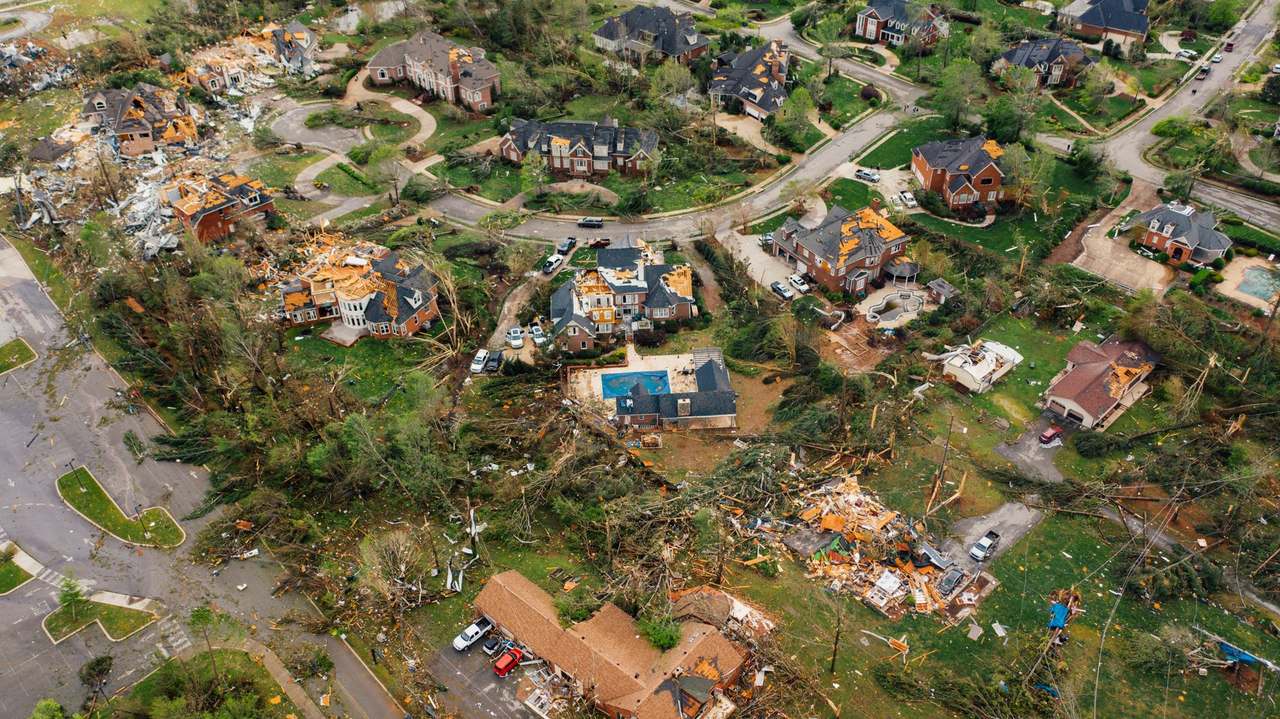
The clearest evidence comes from recorded losses. The European Environment Agency estimates that weather- and climate-related extremes caused economic losses of assets of EUR 822 billion during 1980 to 2024 in the European Union, with over EUR 208 billion, or 25%, falling between 2021 and 2024. The agency adds that statistical analysis shows losses increasing over time, and that the last four years in its record are all among the five highest years of annual losses since 1980.
The same EEA indicator reports average annual losses of around EUR 19.7 billion in 2010-2019 and EUR 44.9 billion for the period 2020-2024. Floods account for 47% of the total over the whole record and heat waves for almost 18%, so the pattern is not driven by a single hazard. Storms, droughts, wildfires and cold spells make up the rest, so climate-related cost is rarely confined to a single type of event.
These figures count economic losses of assets, so they do not by themselves measure other harms such as ill health or damage to ecosystems. They also describe one region; losses elsewhere follow different patterns, and the totals say nothing about who bears the cost, since insurance, public budgets and households absorb losses in different proportions.
Losses are also concentrated. According to the EEA, 5% of events with the biggest losses were responsible for 59% of the total, which is why one severe flood or heat wave can dominate a decade of statistics.
The economic case for early action
Assessments of the overall bill compare two things: what it costs to cut emissions, and the damage avoided by doing so. The IPCC’s Working Group III summary says the global economic benefit of limiting warming to 2°C is reported to exceed the cost of mitigation in most of the assessed literature, with medium confidence.
The same summary is careful about what it does and does not claim. Global GDP continues to grow in modelled pathways, but without accounting for avoided damages or reduced adaptation costs it is a few percent lower in 2050 than in pathways with no mitigation beyond current policies. In other words, the comparison depends on whether the avoided damage is counted, and the report finds that estimates of those benefits grow with the stringency of mitigation.
Timing matters as well. The IPCC reports that modelled pathways with an earlier emissions peak involve more rapid near-term transitions and higher up-front investments, but bring long-term gains for the economy and earlier benefits of avoided climate change impacts, and that the precise size of those gains is difficult to quantify. The tradeoff is therefore between cost now and cost later, not between cost and no cost, a distinction set out in the same summary.
The narrowing window for adaptation
Costs of inaction include the cost of adapting to a changed climate, not just the damage that follows. The IPCC’s Working Group II summary states that there is a rapidly narrowing window of opportunity to enable climate resilient development, and that such development is already challenging at current global warming levels.
Adaptation does pay in documented cases. The EEA notes that studies show benefits from adaptation measures, including nature-based solutions, in limiting the impact of extremes in Europe. It also says that climate-related extremes are expected to intensify and that the pace of adaptation is not keeping up with them, so losses are likely to keep rising even where measures are in place, as set out in its indicator page.
The practical reading is that delay narrows the choices. Each year without cuts leaves more of the problem to be managed through adaptation, which is the more expensive and less certain route in the places where limits to adaptation are reached.
Uncertainty in the estimates
Any cost of inaction figure is a projection built on layers of assumptions, and the assumptions matter more than the arithmetic. Estimates depend on how much warming a given emissions path produces, how that warming translates into losses, which impacts are counted at all, and how harm in the distant future is weighed against spending today.
No single figure captures the total, and honest assessments say so. A study of the social cost of carbon published in Nature reports a preferred mean of $185 per tonne of CO2 with a 5%–95% range of $44–$413 per tonne, showing how wide the plausible range is for the damage from a single tonne.
The US Environmental Protection Agency adds that its own estimates are a partial accounting of climate change impacts and likely underestimate the benefits of cutting emissions, according to its report on the social cost of greenhouse gases.
The IPCC also notes that the conclusion in favour of limiting warming holds unless climate damages are at the low end of the range or future damages are discounted at high rates, as stated in its mitigation summary. The uncertainty therefore points in both directions, but most of the gaps listed by the agencies are omissions that would raise the estimated cost of inaction.
Policy and organisational implications
Policy targets try to bring emissions down on a schedule that balances those costs against the damage avoided, and each government decides how to weigh them. The European Commission describes a package of policies fit for reducing net greenhouse gas emissions by at least 55% by 2030 compared to 1990 levels, and the page on the EU 2030 climate targets explains how that package works, which makes it one example of a framework built around acting earlier rather than later.
The cost argument is also tied to the gases being emitted. A guide to the main greenhouse gases explains which sources matter most, and so where early action avoids the most damage.
Organisations that cite cost-of-inaction figures in public climate communications should check the advertising and consumer-protection rules where they operate, because modeled estimates and recorded losses are not the same thing and are not forecasts for any one business.
Frequently asked questions
Does acting early always cost less?
Not in every sense. Early action usually involves higher up-front spending, as the IPCC notes, and the economic case rests on the damage avoided later. Most assessed studies find the long-run benefit larger, but the answer depends on assumptions such as the discount rate.
Are the recorded losses all caused by climate change?
No. Recorded losses include events that would occur in any climate, and the exposure of buildings and infrastructure also grows. The EEA data describe weather- and climate-related extremes in total and do not attribute each event to warming.
Why do estimates of the damage differ so much?
They depend on climate projections, how damages are valued, which impacts are included and how future harm is discounted. Agencies such as the EPA state openly that their estimates are partial.
Do these figures apply outside Europe?
The EEA figures cover EU Member States only. The IPCC summaries and the global damage estimates are worldwide, but regional losses differ in size and type.