Energy efficiency in buildings means getting the same comfort, light and hot water from less energy, and it is usually the largest and most dependable lever for cutting the emissions linked to the places people live and work.
Buildings are a central piece of the wider question of what is a carbon footprint and how it can be reduced, because heating, cooling and electricity use sit behind so much of the energy a household or organisation consumes. This page walks through where the savings tend to come from, in the order that makes sense for most buildings.
Why buildings matter for emissions
Official European figures show how large the building sector is. The European Commission states that around 40% of energy consumed in the EU is used in buildings, and that around 50% of the EU’s gas consumption is attributable to buildings. It adds that about 80% of the energy used in EU homes goes to heating, cooling and hot water, which is why those three services are the natural place to start.
The picture is similar in the United States. The Environmental Protection Agency notes that buildings use 75% of the electricity generated in the US, for heating, ventilation and air conditioning, lighting, appliances and plug loads. Emissions from a building therefore depend on two things at once: how much energy it needs, and how that energy is produced.
Where the energy goes inside a home
Understanding the split of energy use in a home makes it easier to rank the options. The US Energy Information Administration reports that on average more than half—52% in 2020—of a household‘s annual energy consumption goes to space heating and air conditioning. Those uses are seasonal, energy-intensive and vary with climate, home size and the fuels and equipment in use.
The remainder is spread across water heating, lighting, refrigeration and the growing list of appliances and electronics. Because the largest share is climate control, improvements to the building shell and the heating and cooling equipment usually outweigh swapping individual small devices.
Start with the building envelope
The energy performance of a building reflects its typical energy use, taking into account the envelope, notably insulation and windows, the efficiency of heating, cooling and hot water systems, and the use of renewable energy, according to the European Commission. The envelope comes first because every other measure works better when less heat escapes.
Sealing air leaks and adding insulation are the classic early steps. ENERGY STAR, the US government-backed programme, says that sealing air leaks around a home and adding insulation can provide up to a 10% savings on annual energy bills. Simple fixes include weather stripping on doors and caulking around windows, while bigger jobs include sealing leaks and insulating the attic.
The figure is a ceiling, not a promise: actual results depend on the starting condition of the building, its climate and how it is used.
After the shell is tightened, the size of the heating and cooling system needed often falls, which can make the next step cheaper and the equipment more effective.
Heat pumps and efficient heating and cooling
Heat pumps are the main alternative to burning fuel for warmth. Because they move heat rather than creating it through combustion, ENERGY STAR explains that an air-source heat pump can deliver up to three times more heat energy to a home than the electrical energy it consumes. The same equipment cools a home in summer by pulling heat out.
Models designed for cold climates are meant to keep delivering heating performance and efficiency on very cold winter days, and installers can advise whether a back-up heat source still makes sense for the coldest spells in a given region. Choosing certified equipment and a qualified installer matters as much as the technology itself, because sizing and installation quality strongly affect real-world performance.
Adoption is already visible in the data. The EIA reports that approximately 13% of households in 2020 used a heat pump as the main heating equipment. How much carbon a heat pump saves in practice depends on the electricity supply behind it and on how well the building retains heat, which is another reason envelope work tends to come first.
Lighting, appliances and controls
Water heating, lighting and refrigeration run all year, so efficiency gains there add up steadily rather than seasonally. The EIA attributes the long decline in average household energy use to improvements in building insulation and materials and improved efficiencies of heating and cooling equipment, water heaters, refrigerators, lighting, and appliances.
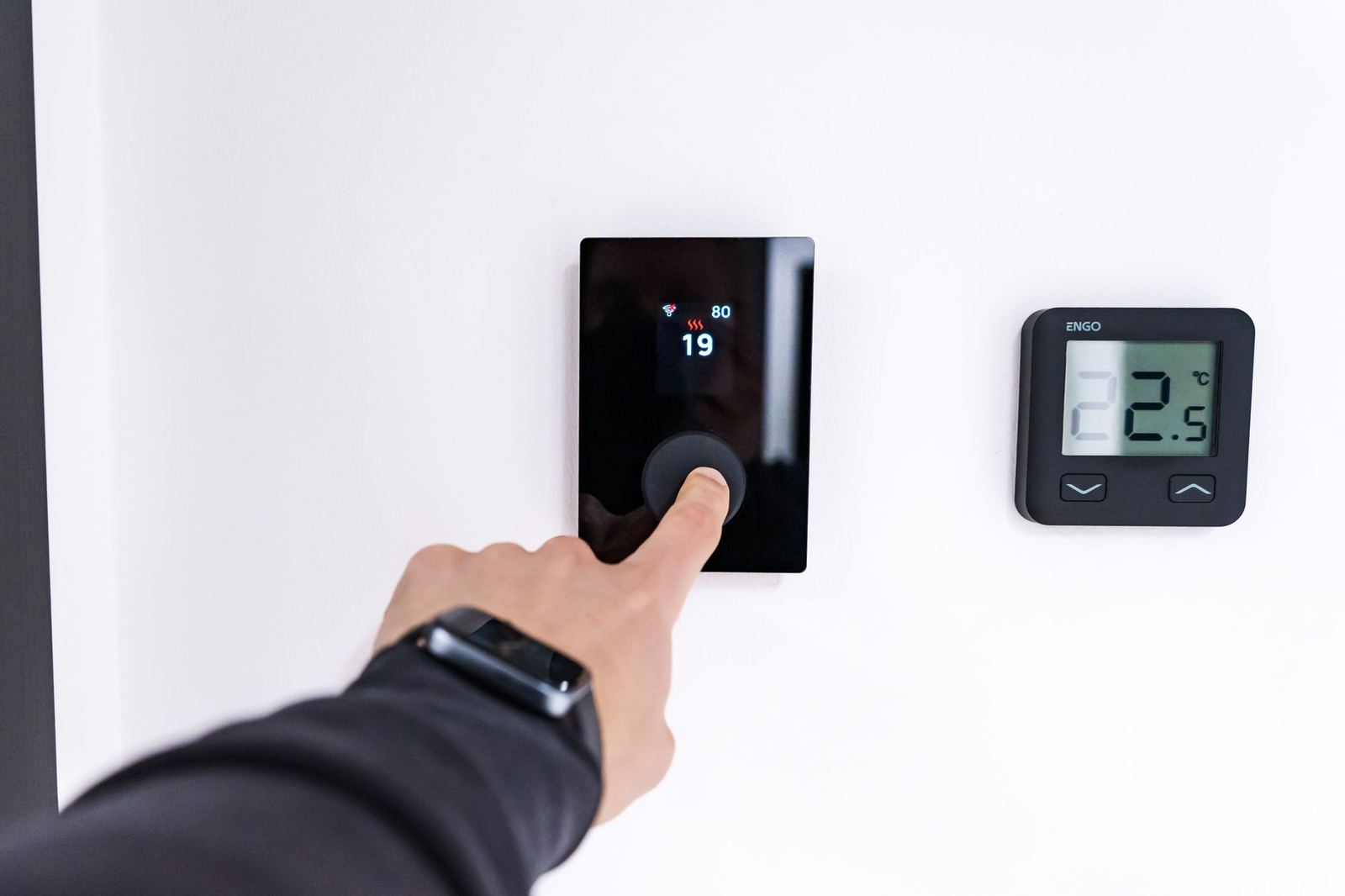
Controls matter too. The EPA’s household calculator treats a programmable thermostat as a way to turn down heating on winter nights and turn up the air conditioning in summer automatically, trimming energy use without changing the equipment. Everyday habits of this kind are covered in more detail in the guide to how to reduce household carbon footprint emissions beyond the building itself.
Operating and maintaining what is already there
Not every gain needs construction work. Offices, schools and apartment blocks often waste energy because heating and cooling schedules no longer match how the space is used, because controls drift out of adjustment, or because equipment runs when nobody is present. Reviewing schedules, checking that sensors and thermostats work, and servicing equipment regularly are low-disruption ways to remove that waste.
Metering helps in the same way. A building owner who can see energy use by system, floor or tenant can spot unusual patterns early and judge whether a retrofit actually delivered what was expected. This is also the data a later carbon accounting exercise needs, which links the topic back to measuring emissions in the first place.
Occupants influence results as well. Closing windows while heating or cooling is running, switching off lights and equipment in empty rooms, and reporting draughts or faults promptly are small habits that keep a well-designed building performing as intended.
Cleaner supply without confusing it with efficiency
Using less energy and using cleaner energy are separate steps. On-site solar is part of how the European Commission defines a building’s performance, while electricity bought elsewhere is accounted for differently. Renewable energy certificates can change how the emissions of a building’s electricity are reported, but they do not reduce the amount of energy the building uses, so the two approaches answer different questions.
A business or landlord that makes public claims about a building, such as describing it as low-carbon or highly efficient, should check the advertising and consumer rules where it operates before publishing them.
Policy and the pace of renovation
Governments treat existing buildings as a priority because most of them will still be standing for decades. The European Commission describes the revised directive as aiming at a zero-emission and fully decarbonised building stock by 2050, and notes that the annual energy renovation rate remains very low at 1%.
To raise that pace, the same page says the rules will trigger the renovation of the 16% worst-performing buildings by 2030 and of the 26% worst-performing buildings by 2033. Each country keeps flexibility over which buildings to target, and can exempt categories such as historical buildings and holiday homes.
Frequently asked questions
What is the first step to improve a building’s energy efficiency?
Most guidance starts with the envelope: finding and sealing air leaks, then adding insulation where heat escapes. An energy audit or assessment can show which measures suit a particular building.
Do heat pumps always cut emissions?
They use less final energy than combustion heating, but the carbon saving also depends on how the electricity is generated and on how well the building holds heat. Cleaner power and a tighter envelope both improve the result.
Is energy efficiency the same as renewable energy?
No. Efficiency reduces how much energy a building needs, while renewable energy changes where the remaining energy comes from. The strongest plans usually combine both.